
The Role of a New Machine
An old book puts today's new technology in perspective
by Dan Cohen
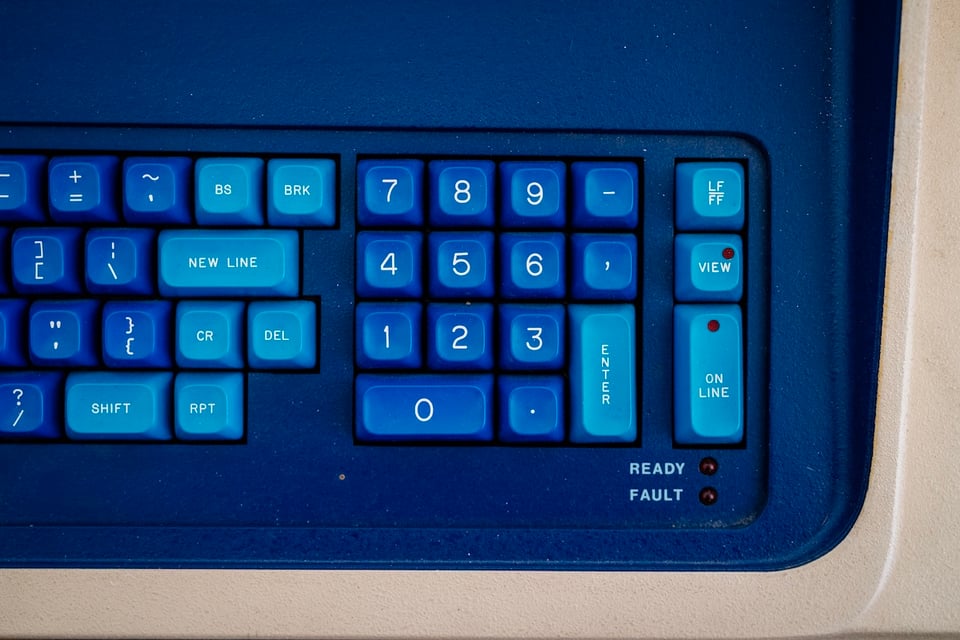
Stop me if you’ve heard this one before:
A crack team of hardware and software engineers, inspired by breakthroughs in computer science and electrical engineering, are driven to work 18-hour days, seven days a week, on a revolutionary new system. The system’s capabilities and speed will usher in a new era, one that will bring transformative computing to every workplace. The long hours are necessary: the team knows that every major computer company sees what they see on the horizon, and they too are working around the clock to take advantage of powerful new chips and innovative information architectures.
The team is almost entirely men, men whose affect and social skills cluster in a rather narrow band, although they are led by a charismatic figure who knows how to persuade both computer engineers and capitalists. This is a helpful skill. Money, big money, is flowing into the sector; soon it will overflow. Engineers are constantly poached by rival companies. Hundreds of new competitors arise to build variations on the same system, or to write software or build hardware that can take advantage of this next wave of computing power. Some just want to repackage what the computer vendors produce, or act as consultants to the companies that adopt these new machines.
The team solves one problem after the next, day and night, until the machine is complete. They focus, overfocus, block out the other concerns of the world. Their wives are ignored, as are the kids. The work is too important.
* * *
Such is the story of Data General and the group that built the computer system code-named “Eagle,” which would be successfully marketed as the Eclipse MV/8000. My summary above comes from Tracy Kidder's wonderful book The Soul of a New Machine, published in 1981. It’s about the rise of minicomputers, a now-amusing name for machines the size of double-wide refrigerators, which were considered a major advance during the 1970s, when gargantuan IBM mainframes still roamed the earth and were possessed only by the largest companies and bureaucracies. Minicomputers used new CPUs and memory that made computing accessible to a much wider range of applications and locations, and were relatively cheap. They flourished.
The Soul of a New Machine has much to recommend it — it won the Pulitzer Prize for its propulsive narrative and crisp explanations of complex technology — but I’m writing about it now, following Kidder’s recent passing, because the book helpfully dislodges you from your presentist perspective and asks, “Look what happened before — sound familiar?”
* * *
A half-century after it was published, The Soul of a New Machine does a better job challenging AI hype than most current criticism. (Also, there are probably writers working on books about AI who are shaking their fists at Kidder for beating them to that memorable title.) It's hard to read The Soul of a New Machine in 2026 without wondering whether all this AI hype is really so new. Is AI truly more revolutionary than a previous wave of computer technology that offered, for the first time, to put screens on every desk of every company? The Data General team helped to bring about a transition not from existing software and hardware to incredibly intelligent software and hardware, or from powerful computers to superpowerful computers, but literally from paper to digital files and high-speed processing. Now that is a transition. The millions of companies that could not afford an IBM mainframe could afford a Data General Eclipse or a DEC VAX system or a minicomputer from another competitor. They could, for the first time, give every employee the power of computers. Is having Microsoft Copilot help your accountants with their spreadsheets more revolutionary than moving those accountants from physical spreadsheets to electronic ones?
Amazingly, the final chapters of The Soul of a New Machine tackle exactly the same profound questions we are struggling with today regarding the impact of artificial intelligence, and Kidder records Data General engineers expressing concerns that sound straight out of the mouths of engineers working at OpenAI or Anthropic. The team’s excitement upon the completion of the Eagle leads to reflections and bigger worries than beating their competitors. What if the Pentagon wants to use the Eagle for war or other destructive purposes? Should the team object or build back doors into the machine? What will the new computer system mean for employment, since it will replace many functions of work with software, and do those tasks faster than anyone can imagine, in nanoseconds? What if their work culminates in true artificial intelligence, and the machines take over and destroy us?
Spending so much time with the team, Kidder begins to ponder these questions himself — and has his own unsettling encounter with the technology. An engineer introduces Kidder to Adventure, one of the engrossing text games of early computing. He is sucked into its digital world, playing nonstop for hours. The computer suddenly feels alive, intelligent.
But Kidder pulls back.
It was the time of night when the odd feeling of not being quite in focus comes and goes, and all things are mysterious. I resisted this feeling. It seemed worth remembering that Adventure is just a program, a series of step-by-step commands stored in electrical code inside the computer.
How can the machine perform its tricks? The general answer lies in the fact that computers can follow conditional instructions.
Kidder turns to one of the Data General engineers, Carl Alsing:
I asked Alsing how he felt about the question — twenty years old now and really unresolved — of whether or not it's theoretically possible to imbue a computer with intelligence — to create in a machine, as they say, artificial intelligence.
Alsing stepped around the question. “Artificial intelligence takes you away from your own trip. What you want to do is look at the wheels of the machine and if you like them, have fun.”
Alsing’s focus on the role of the new machine in your life or work, rather than its purported soul, instantly dispels the mythology surrounding this emerging technology. Even after an all-nighter building a revolutionary computer, Alsing is lucid about what he is making: a tool that might be helpful for some people and some purposes, but not for others.
* * *
In the 1980s, most of the minicomputer companies, launched with such excitement in the late 1970s, failed. Data General was acquired for a fraction of the billions it was once worth. The minicomputer, however, was broadly adopted, was transformative, became routine, and then was surpassed by a new new machine, the personal computer.
Later, Data General’s domain name, DG.com, was sold to a chain of discount stores, Dollar General.